
Wat zijn de belangrijkste wijnregio's en hun typische smaakprofielen?
By OnlyWines editorial team
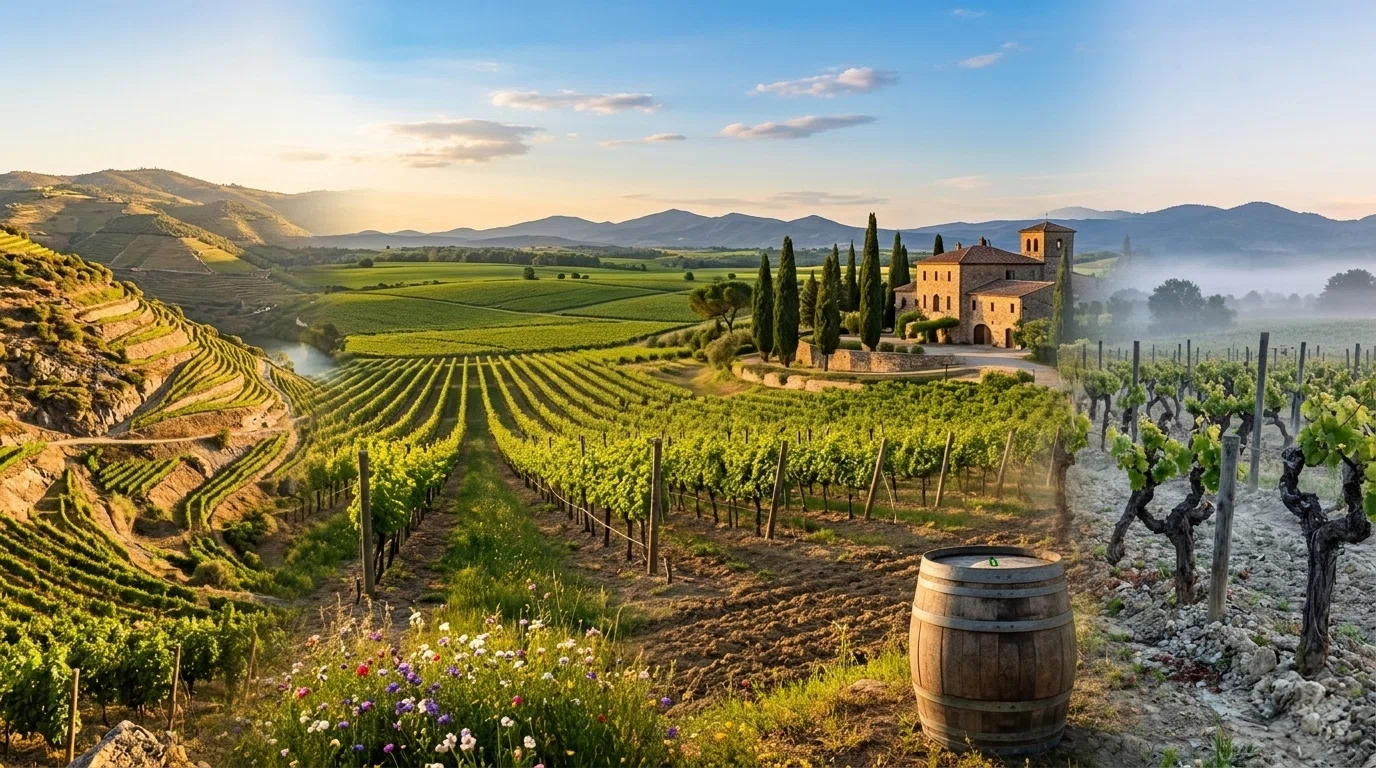
Wine regions shape the taste of your wine through a unique combination of climate, soil and tradition, which we also call terroir. Once you understand whether a region is cool or warm, you immediately know whether you are holding a fresh, light wine or a full, powerful one.
In this article
At OnlyWines you discover quality wines directly from independent merchants, from the most iconic and surprising wine regions in the world.
Why does a wine region say more than the country alone?
Imagine you are in the supermarket or scrolling through our webshop and you see 'French wine'. That actually says very little. A wine from the cool, northern Loire Valley tastes completely different from a powerful red from the sun-drenched Languedoc in the south. The region is the real fingerprint of the wine.
When we talk about wine regions, we mean the specific place where the grapes grow. The soil (limestone, granite, clay) and the climate (rainfall, hours of sun, wind) together shape the character of the grape. In the wine world we call this terroir. For you as a wine lover, the region is the shortest route to your favourite taste profile.
At OnlyWines we believe in the story behind the bottle. Because we work with various specialist wine merchants, you will not find generic mass-market wine with us, but the unique wines that are typical of their origin.
The region is the real fingerprint of the wine.
How does a region's climate affect the taste?
Before we go deeper into each region, it helps to understand the difference between cool and warm wine regions. This is the basis of every good wine choice.
Cool climate
In regions such as the Loire, Germany or northern Italy, grapes ripen more slowly. They keep their acidity and develop subtle aromas of green fruit and flowers.
- Taste: fresh, taut, lively
- Alcohol: 11% – 13%
- Example: German Riesling, Pinot Noir
Warm climate
In regions such as Puglia, the Barossa Valley or large parts of Spain, the sun shines abundantly. Grapes build up a lot of sugar, which results in more alcohol and ripe dark fruit.
- Taste: full, round, powerful, spicy
- Alcohol: often 14% or more
- Example: Malbec, Primitivo
Which French wine regions should you know?
France is still the cradle of modern viticulture. The regions here are so iconic that they often serve as a blueprint for the rest of the world.
Bordeaux
World-famous for its age-worthy wines. Broadly divided into the Left Bank (Cabernet Sauvignon) and the Right Bank (Merlot).
Taste: firm, with tannins that soften, cedar, graphite and dark fruit.
Goes with: red meat and game dishes.
Burgundy
It is all about nuance. Almost exclusively Chardonnay for white and Pinot Noir for red. The soil changes every few metres.
Taste: elegant, complex; white is full and creamy, red is light in colour but profound.
Goes with: poultry, creamy sauces, oily fish such as salmon.
Provence
The king of rosé. The warm Mediterranean climate and the sea breeze produce wines that are both ripe and refreshing.
Taste: dry, red berries, peach and sometimes a hint of lavender or salinity.
Goes with: salads, light fish dishes or as an aperitif.
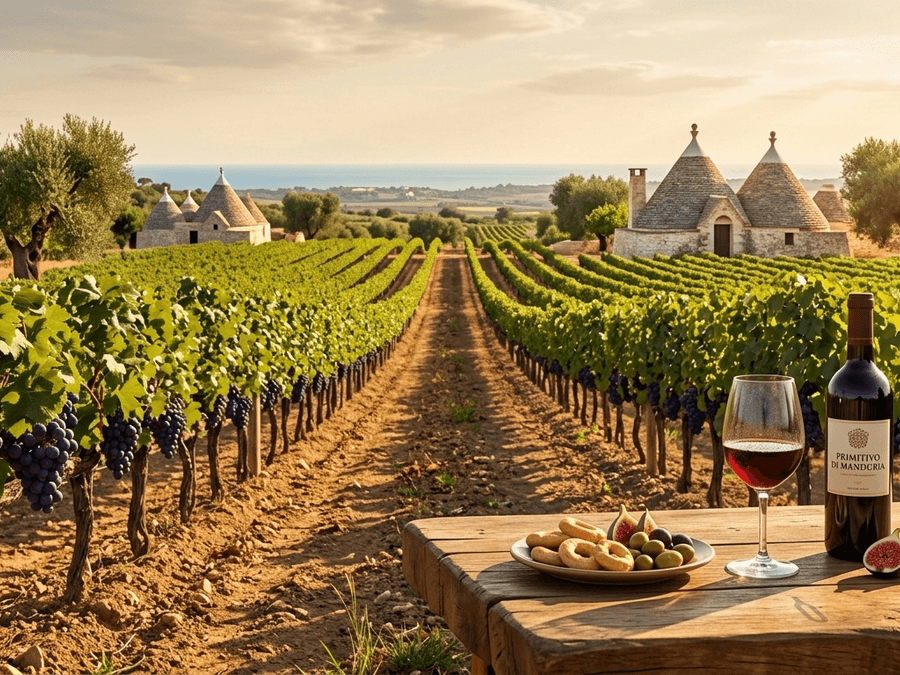
Why are Italian wine regions so popular?
Italy has more indigenous grape varieties than any other country. That makes discovering Italian wine regions a lifelong adventure. From the rolling hills of Tuscany to the sun-drenched plains of Puglia, every region has its own character.
In the heel of the boot it is hot. This is where the sun-soaked powerhouses come from, such as Primitivo and Negroamaro: lush, ripe wines with almost jammy fruit.
Tuscany
The land of the Sangiovese grape: Chianti Classico, Brunello di Montalcino.
Taste: high in acidity and tannins, cherry, dried herbs, tobacco.
Goes with: pasta with tomato sauce, Bistecca alla Fiorentina, hard cheeses.
Puglia
Sun-drenched powerhouses: Primitivo and Negroamaro.
Taste: lush, ripe, almost sweet. Little acidity, lots of body.
Goes with: spicy dishes, barbecue or a rich stew.
Veneto
A region of extremes: from fresh Prosecco to powerful Amarone della Valpolicella.
Taste: intense, raisins, chocolate, high alcohol.
Goes with: aged cheeses, game or as a meditation wine.
Which Spanish regions offer the best value?
Spain has modernised enormously in recent decades. Where it used to be mainly about oak ageing, the quality of the fruit now comes first.
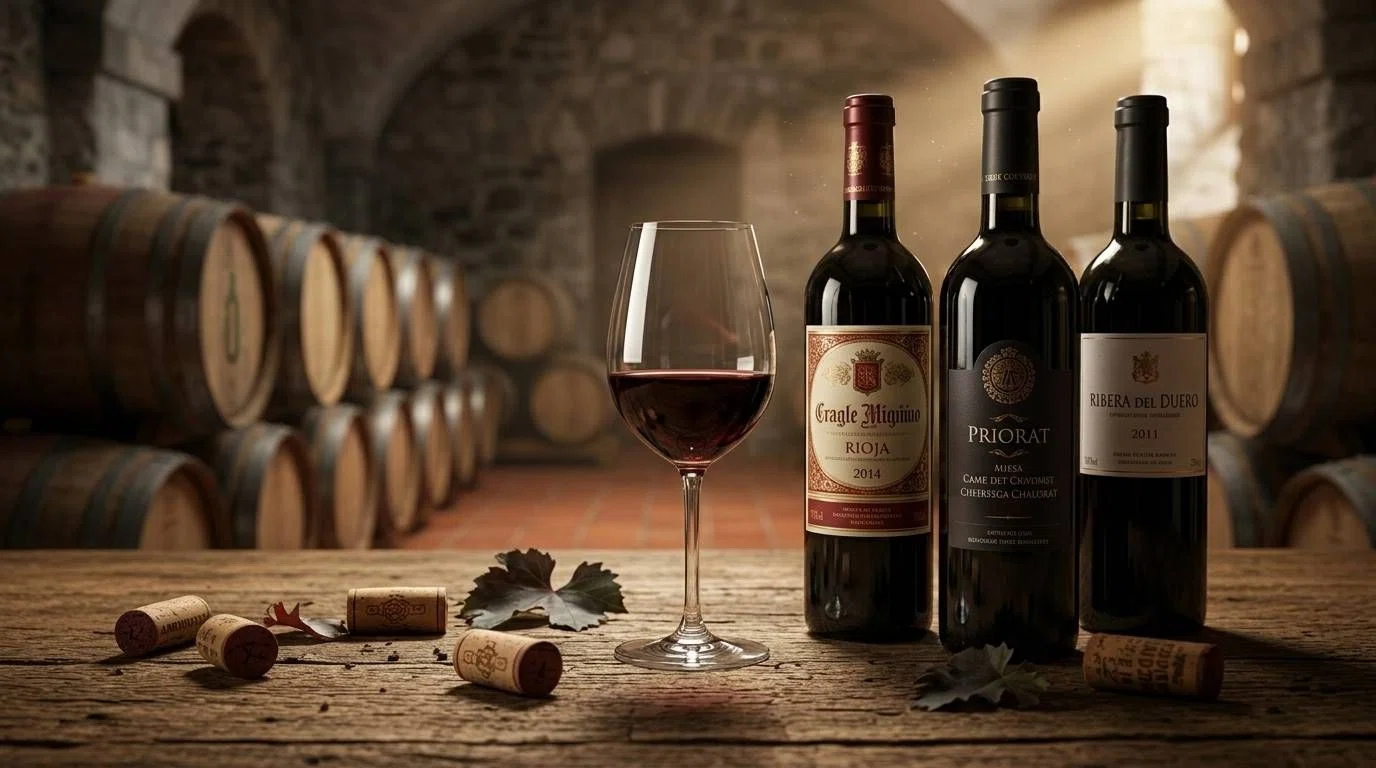
Rioja
Tradition and renewal. The Tempranillo grape is central; choose from Joven, Crianza, Reserva or Gran Reserva. Flavours range from juicy red fruit to complex vanilla and coconut from American oak. It goes with lamb, tapas and mature chorizo.
Rueda
White wine with character from the Verdejo grape: zesty, aromatic, grapefruit, passion fruit and a characteristic bitter note. It goes with Asian cuisine, sushi or light aperitif snacks.
Quick guide: which region fits your taste?
Can't see the wood for the trees? Use this overview to go straight to the right category in our webshop.
Light & fresh
Loire (France), Mosel (Germany), Rueda (Spain)
Sauvignon Blanc, Riesling, Verdejo
Full & creamy
Burgundy (France), California (USA), Mendoza (Argentina)
Chardonnay, Viognier
Fruity & smooth
Beaujolais (France), Valpolicella (Italy), Pfalz (Germany)
Gamay, Corvina, Spätburgunder
Powerful & spicy
Rhône (France), Puglia (Italy), Priorat (Spain)
Syrah, Primitivo, Grenache
Classic & complex
Bordeaux (France), Piedmont (Italy), Rioja (Spain)
Cabernet Sauvignon, Nebbiolo, Tempranillo
Frequently asked questions about wine regions
Does a famous region always mean a better wine?
Not necessarily. A famous name such as Champagne or Bordeaux guarantees a certain style and often a minimum level of quality, but you also pay for the name. It is precisely in less famous wine regions, such as the Douro in Portugal or the Pfalz in Germany, that you find outstanding quality at a lower price. At OnlyWines we select merchants who also have these gems in their range.
Does the soil really influence the wine that much?
Yes, more than you think. A slate soil (as in the Mosel) holds warmth; a limestone soil (as in Chablis) gives the wine that typical mineral, almost saline taste. When you drink a wine and taste a kind of 'stony' note, that is often the region talking to you.
Why does Sauvignon Blanc from New Zealand taste so different from one from France?
This is the perfect example of why region matters. In Marlborough (New Zealand) the sun is intense but the nights are cool. That produces explosive aromas of passion fruit and freshly cut grass. In Sancerre (Loire, France) the climate is milder and the soil richer in limestone, which results in a much more restrained, elegant wine with notes of flint and green apple. Same grape, a completely different region, a world of difference.
When you drink a wine and taste a kind of stony note, that is often the region talking to you.
A simple route
How do you find your favourite region at OnlyWines?
Use our filters
Filter directly by country and region. A fan of Italian red? Choose Italy and Red.
Filter by taste profile
Don't know the regions by heart yet? Filter on 'fresh & fruity' or 'full & powerful' and we automatically match the right regions.
Discover small wineries
Our merchants work with small winegrowers, so you find wines that let you taste the essence of their region.
Order by the bottle
Mix and match different regions without full cases; put together your own 'tasting around the world'.
At OnlyWines we make it easy to navigate among all those thousands of options. Because we are a platform for various specialist merchants, you have access to an enormous library of origins.
Easy and reliable. Your order is shipped directly by the specialist wine merchant. They know better than anyone how to pack a fragile bottle of wine safely. Ordering more than 75 euros? Then shipping is usually completely free.
Set off on a journey through the wine regions
Whether you fall for the cool elegance of the German hills or the sun-drenched power of the Spanish plateaus: the region is your guide. Our app works as a digital sommelier in your pocket; scan a label or filter on your favourite flavours and we tell you exactly which region fits.
Keep reading
Rode wijn kiezen: waar let je op bij druif, regio en jaartal?
Ontdek hoe je de juiste rode wijn kiest: van druif en regio tot jaartal, tannine en welk gerecht erbij past.
Read article
Sauvignon Blanc of Chardonnay: wat is het verschil en wat past bij jou?
Vergelijk smaak, klimaat en wijnstreken van de twee populairste witte druiven, zodat je weet welke fles bij jou past.
Read article
Wat is een goede witte wijn voor beginners?
Een praktische gids om witte wijn te leren kennen: van fris en droog tot vol, met druiven die voor beginners het makkelijkst te proeven zijn.
Read article